Showing posts with label rock. Show all posts

Thursday, 8 September 2022

Mediterranean Gulls on the Camel estuary 2022.


346N

Meet Med Gull 346N first ringed as a >3calendar year bird on 21/05/2018 at Antwerpen; Flanders; BELGIUM.
 
346N has come back to the Camel estuary every year since in late summer and into the autumn.
It wintered in the salinas or saltpans of Tavira; Faro Portugal on 22/11/2019.

It also revisited its birthplace at Antwerpen on 5/03/2021.

So much is known about this bird simply by people reporting the colour ring to the Med Gull ringing project.

It is known now that Med gulls have a 2 stage migration where birds leave their breeding grounds in Western Europe and head west and appear with us on the Camel estuary and of course many other areas locally. They then stay from July into October before migrating again south down to Portugal or Spain until finally returning north to their breeding grounds in February or March.

##################################


R9JC 

This is R9JC a juvenile Med gull ringed as a chick in the nest on 25/06/2022 at the Polder de Sebastopol; Barbâtre; Vendée; Pays de la Loire; France.

This was the first sighting since it's ringing when I photographed it on  30/08/2022 Porthilly, Camel Estuary; St Minver; Cornwall; England; United Kingdom 50,32N 4,55W Langdon, Adrian.

##########################################
 

RV6K 

This is RV6K ringed as a chick at the nest on 01/07/2017 at Polder de Sebastopol; Barbâtre; Vendée; Pays de la Loire; France 46,56N 2,09W.

RV6K has visited the Camel estuary every year since 2017 and has wintered both in Spain and Portugal in that time along with regular visits back to the breeding grounds in France where it was born.

Here are just a few highlights of its lifetime travels below.......

12/08/2017 Le Gourinet; Plozévet; Finistère; Bretagne; France 47,57N 4,24W

13/09/2017 Camel estuary; Padstow; Cornwall; England; United Kingdom 50,32N 4,55W

02/02/2018 Azurara; Vila do Conde; Porto; ; Portugal 41,21N 8,44W

18/06/2018 ; Henvic; Finistère; Bretagne; France 48,39N 3,57W

11/08/2018 Camel estuary; Padstow; Cornwall; England; United Kingdom 50,32N 4,55W

14/08/2018 Harlyn Bay; St Merryn; Cornwall; England; United Kingdom 50,32N 5W

24/08/2018 Lanneunet; Plouénan; Finistère; Bretagne; France 48,37N 3,57W

14/10/2018 Camel estuary; Padstow; Cornwall; England; United Kingdom 50,32N 4,55W

29/03/2019 Polder de Sebastopol; Barbâtre; Vendée; Pays de la Loire; France 46,56N 2,09W

17/09/2019 plage de Porsmilin; Locmaria-Plouzané; Finistère; Bretagne; France 48,22N 4,41W

07/10/2019 Camel estuary; Padstow; Cornwall; England; United Kingdom 50,32N 4,55W

01/08/2020 Camel estuary; Padstow; Cornwall; England; United Kingdom 50,32N 4,55W

28/10/2020 Camel estuary; Padstow; Cornwall; England; United Kingdom 50,32N 4,55W

02/02/2021 River Piles; Gijón; Asturias; Asturias; SPAIN 43,32N 5,39W

02/02/2021 Playa San Lorenzo; Gijón; Asturias; Asturias; SPAIN 43,32N 5,39W

11/02/2021 Port Atlantique La Rochelle; La Rochelle; Charente-Maritime; Nouvelle-Aquitaine; France
46,09N 1,14W

26/03/2021 Polder de Sebastopol; Barbâtre; Vendée; Pays de la Loire; France 46,56N 2,09W

26/07/2021 Camel estuary; Padstow; Cornwall; England; United Kingdom 50,32N 4,55W

05/01/2022 Playa San Lorenzo; Gijón; Asturias; Asturias; SPAIN 43,32N 5,39W

27/03/2022 les Monteaux; Vivy; Maine-et-Loire; Pays de la Loire; France 47,2N 0,06W female parading with male adult unringed

30/08/2022 Porthilly, Camel Estuary; St Minver; Cornwall; England; United Kingdom 50,32N 4,55W

where I photographed it.

In total to date there have been 61 sightings of RV6K. 

######################################

I have the history of many more of these birds but I'll just show the photos, all of which I photographed from my kayak by drifting past them as they perch on the oyster floats at Porthilly Rock.

32KP

34LR

AK.AN 

R6HV

R9JC

R0RR

Oyster floats at Porthilly Rock, Cornwall.

Amongst the oyster floats in the kayak

Thursday, 22 July 2021

Kayaking amidst Mediterranean Gulls, Sandwich Terns & speedboats on the Camel estuary. 20th July 2021.

Adult Med Gull first ringed as an adult in 2017 in Antwerp, Belgium.

As Cornwall swelters in an unusual heatwave the only place I could feel comfortable was out on the water in my kayak. 

Getting a parking space at Rock was my first hurdle to overcome and it was a case of driving around in circles until any red & sunburnt tourist had decided they'd had enough sun for one day!

As there had been several sightings of Risso's dolphins at the mouth of the estuary I thought I'd try paddling out that way to have a look around. I've been kayaking quite a long time but still haven't the strength or confidence to go out to sea. I paddled along past Rock and Daymer Bay until I met the Doom bar, a notorious sand bar at the mouth of the estuary which, as it's name suggests, has caught out many a mariner over the centuries.

I couldn't spot any dolphins although did have good views of Compass jellyfish & also Purple jellies.

A very poor pic of a Compass jellyfish taken with my phone through my polarising sunglasses!


Purple Jellyfish washing up on the shore.

It was unbelievably calm and the water looked so inviting but there were dozens of speedboats out there with crazed people shouting & screaming in excitement as I did my best to keep a good line on the kayak to avoid being tipped out. The final straw for me was when one of the boats made a bee-line for me and just veered off before "taking me out"!


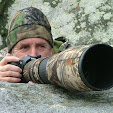
Selfie time!

Daymer Bay


Rock beach & dunes.

That was enough so I headed back to the area around Porthilly in search of some birds to photograph.

Being high tide I guessed that the oyster floats would be supporting a few good birds and I wasn't disappointed as they were covered in over one hundred Med Gulls along with a few Herring & Black headed gulls. Sandwich terns also held territories at the rear of the floats.

My tactics for photographing from the kayak are to slowly drift up to the floats with my paddles low in the water until I can get a good angle on the birds. I'm using my old Nikon D300 with a 70-300mm lens. Not the best optically but cameras & salt water don't work too well together so it's a balancing act of how much expensive kit to risk for the photos.

Mediterranean Gull

Mediterranean Gull

Mediterranean Gull

Mediterranean Gulls

Mediterranean Gull 

Mostly Mediterranean Gulls. 

 There were quite a few birds with colour rings or metal rings and I'm aware of a few international projects so I tried to get a few images where the rings could be read. I sent a load of pics off to Mark Grantham of the West Cornwall Ringing Group and by the next day have had some interesting results with 4 of the birds being ringed in Antwerp, Belgium & 1 in Vendée, Pays de la Loire, France.


A few of the Med Gulls with rings


Alongside the gulls were about 10 Sandwich Terns coming & going from the floats, their constant chittering call highlighting their presence. Some had this seasons juveniles close to them and a couple were ringed with metal rings so very difficult to read from the photos.

Juv Sandwich Tern

Sandwich Tern

Sandwich Tern

Sandwich Tern

Sandwich Tern

Sandwich Tern 

Sandwich Terns 


This juvenile Shag also liked to haul out on the floats.

Shag

Shag

All in all a super afternoon and a yet again aching arms & shoulders but we have to suffer for our art!

Thursday, 27 June 2019

Gannets...... Bass Rock, Scotland Thurs 20th June 2019.


A Gannet colony is one of the greatest places a bird lover and photographer can go to!

This was my 9th landing on Bass Rock  at the mouth of the Firth of Forth just off North Berwick and perhaps 20 miles from Edinburgh.

I first visited with Dave Thomas in 1984 and made several more landings in the late 80's and also in the 90's.

The place never ceases to amaze me with the colour, the noise and of course the smell!

Numbers have continued to increase and it is the largest Gannet colony in the world... in fact the Scientific name for the gannet is Sula bassana after this rocky outcrop which is actually an old volcanic plug.

There are supposed to be in excess of 150,000 birds but I have to admit I didn't stop to count them.

When we first came we could walk over the concrete path to the far side of the island where the Trinity House guys used to maintain the foghorn. Now everything is automated for the horn & the lighthouse and the gannets are now covering almost all of the rock.

There are now a handful of pairs nesting at St.Abbs head amongst the guillemot colony a few miles down the coast.

Here are a couple of short video clips, apologies for the wind noise !