Showing posts with label nest. Show all posts

Sunday, 14 May 2023

Nuthatch nesting in oak tree. 12th May 2023.


 I checked out this regular nesting site in a huge oak tree in the Camel valley and sure enough a pair of Nuthatches were actively feeding young.

I photographed this from quite a distance with a 500mm lens to avoid any chance of disturbance and the birds carried on their normal routine without flinching. I watched the same nest hole last year but this year the late evening light was much better and illuminated the tree nicely.

Nuthatches will partially block up natural holes or old & unused woodpecker holes with mud so that when it hardens it fits their body size perfectly. This then helps keep predators from stealing their eggs or eating their young.

A few more photos follow.....

A tight squeeze


Wednesday, 2 June 2021

Wheatears on Bodmin Moor. 2nd June 2021.


Female waits for the male to leave the nest


An early morning trip up onto the high moor to the East of Bodmin moor was fruitful today with 2 pairs of Wheatears nesting in the stone walls and a pair of Redstarts.

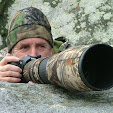
Fortunately I had my pop-up hide in the car so set that up at a distance from the wall and started taking pics with the 500mm lens.

The birds accepted the hide straight away and I was able to move a bit closer after an hour. It was only then that I noticed a large Highland cow with massive horns ambling my way! Fears of it having a scratch at my expense on the side of the hide were fortunately unfounded!

A few downpours of rain made me glad I brought the hide as the birds continued to feed all through the rain and I watched from the dry.

Fears of many birds struggling to find insects in the cold weather we'd had were forgotten as they brought back a continuous stream of flies, caterpillars & even a damselfly.

Here are a few images from the morning, I'm hoping to have a go at the Redstarts one evening as they were in full shade in the morning.

Female Wheatear

Male Wheatear

Male Wheatear

Male Wheatear

Male Wheatear

Male Wheatear

Female Wheatear with a damselfy

Sunday, 16 May 2021

Kingfishers on the River Camel, Cornwall. 2021.


Adult male after bathing


I've been watching & photographing 2 nesting pairs of Kingfishers on the River Camel this spring. I hold a Natural England Schedule 1 licence to photograph them near to the nest as it's an offence to disturb these birds when nesting and of course it's not in my interest to cause any disturbance as then I'd get no pictures and more importantly the birds might fail to breed.

As it was one of the pairs failed and the other pair fledged at least 3 young yesterday (15th May).

The pair that failed had just started feeding young with the male active and the female still brooding the clutch. It was a cold rainy few days and I'm not sure of the cause of failure but it could have been their limited ability to catch prey when the river became muddy or one of the adults being taken by a predator or something as simple as the burrow collapsing.

Adult female taking a break from digging the nest burrow. Note the earth on the bill.

The female at this nest was very pale coloured on the breast and I did wonder if she was a late bird from last year and wasn't experienced although I did watch her take a brook lamprey & deal with it well.

Female with a brook lamprey

Female with a brook lamprey 

Male with salmonid

Male kingfisher

Male kingfisher  

Female kingfisher

Female kingfisher after a bath

Female Kingfisher with a bullhead


Male kingfisher with a brook lamprey

After taking many hundreds of photos of "birds on sticks" I played around with fast exposures and tried to catch the birds visiting the perch, usually after emerging from the water as they usually dunk in the river after leaving the burrow to clean off any earth and fish slime from the nest.


Slow shutter speed!

On the 15th May the young left the confines of the burrow to a bright new world. I saw 2 young and the adults were still carrying food to the nest so at least 3 young. Eventually one more emerged and sat in an alder sprig in the bank calling for food.

A newly emerged youngster

Female kingfisher with a bullhead and a begging youngster

Photobombing from the male

Female kingfisher with a bullhead and a begging youngster

Female kingfisher with a bullhead and a begging youngster

The adult female would not let the youngster have the fish but kept teasing it by putting it to its beak and then taking it away again. I guess some kind of training for their future survival.

Finally I watched a lone young kingfisher sat on an old water diversion board, spending time looking into the water....was it looking at its reflection for the first time or eyeing up its next meal?


 Always a great pleasure to be able to spend time in the company of these amazing and beautiful creatures. Hopefully they'll soon start on 2nd broods to keep the numbers up on our river.
 

Sunday, 5 July 2020

Male Kingfisher, River Camel, Cornwall 2nd July 2020.


Thinking I may have identified a kingfisher nest along the riverbank.

I've seen both male & female in the area & today I watched the male sit on a branch low to the water & make tiny contact calls toward the hole before spending a little time in the burrow.

I'm hoping this is a 2nd brood nest site as I totally missed the first brood due to the "lockdown" during the Covid-19 Coronavirus scare.

I'll be keeping an eye on this place for the next few weeks, hoping to see the adults start carrying fish to the burrow.
Fortunately this is a part of the river where I have a Schedule 1 kingfisher photography licence.


I've also done a short 2 minute video of the bird preening so to view it please click on the link to my YouTube channel.

Kingfisher preening video link.

Wednesday, 27 June 2018

Oystercatcher nests on rugby pitch... again! 27th June 2018.


A bit of deja-vu as for the 2nd year in succession an Oystercatcher pair have successfully fledged 3 young from a nest almost on the centre spot of the Wadebridge Camels rugby pitch at Egloshayle.

I've been monitoring the nest for almost a month and was relieved when they hatched yesterday.

A big thanks to Ray Davies and all the helpers at the Camels for "cutting around them" again this year! Normal service can now be resumed!


Thursday, 24 May 2018

Birds in Hungary Day 4. Hoopoe site revisited.17th May 2018.


I revisited the Hoopoe nest site this morning to try to get some better light on the bird than the previous visit.

The nest is situated in a woodland clearing and has a lot of trees surrounding it and thus is very dark.

This makes it a bit of a challenge photographically if one wants to try to catch the adult bird in flight as it feeds the young which are at the stage of hanging out of the nest hole in order to be first for the food!

Fortunately the newer digital cameras (DSLR's) are good at coping with bad light by upping the ISO.

So, apologies for some poor picture quality but I had much pleasure spending time with these stunning birds.


Wednesday, 27 May 2015

Long-tailed Tits... it's a family affair!


I came across a family of Long tailed Tits all carrying food to a nest in a gorse bush at Breney Common Nature Reserve early this morning.

Unusually there were at least 5 birds all feeding the nestlings in their rather unique nest of moss, cobwebs and hair, decorated on the outside with lichen.

Whether this was a second brood or not, as they are known to nest early, it seemed possible that siblings from the first brood had been enlisted into feeding the next clutch.

If it works don't knock it!


Sunday, 10 May 2015

Coal Tits


A pair of Coal Tits were busy carrying food to their nestlings this morning on the outskirts of  Wadebridge.

They were nesting in a hole in an old stone wall and were bringing an assortment of prey to their chicks consisting of flies, ants, bees, green caterpillars and aphids.

Fortunately for me they were using a nearby hazel tree to perch in whilst en-route to the nest so I was able to take some photos without causing any disturbance.

My thanks to Ed Treverton for the "heads up" on this one!

Any gardener would be pleased to have these super little birds around as there'd be no need for any pesticides or insect repellant!